
05 October 2026
Beginner Track Day Car: How to Choose, Prep and Drive Your First Session
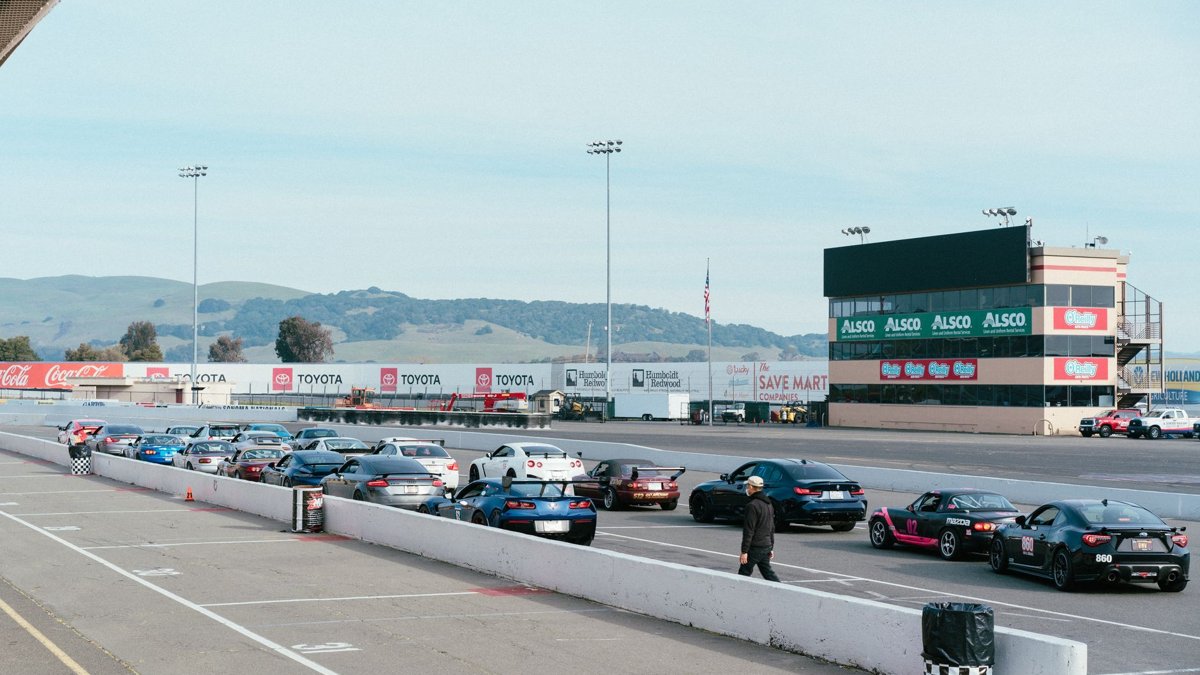
Almost any road car is a usable beginner track day car, as long as it passes a noise test, has good brakes and holds oil pressure under load. You do not need a dedicated track toy, a roll cage or 300bhp to have a brilliant first day. A standard hot hatch, a mildly sporting saloon or even a sensible diesel will complete a novice session comfortably — the limiting factor is almost always the driver, the brake fluid and the tyres, not outright power.
This guide covers what actually makes a good beginner track day car, how to prepare the one you already own, and what to expect in your first sessions on circuit. If you are still choosing which event to book, our beginner track day for cars guide walks through the booking side in detail.
What makes a good beginner track day car
Forget the spec-sheet arms race. The characteristics that make a first track day enjoyable and safe are far more boring than most forums suggest:
- Predictable handling. A car that understeers gently at the limit is more forgiving than a tail-happy rear-driver you have to catch.
- Decent brakes with room to upgrade. Heat management is the single biggest mechanical challenge on track. Brakes fade long before engines give up.
- Manageable power. 120–250bhp is plenty to learn with. Big power just means you spend the day managing wheelspin and arriving at corners too fast to learn anything.
- Reliability and parts availability. A common car with cheap consumables is far less stressful than something exotic.
- It passes the circuit's noise limit. Many UK venues run static limits of 98 dB(A) and drive-by limits around 92–105 dB(A). A standard exhaust almost always passes; a loud aftermarket system may not.
Cars that consistently work well for beginners
These are popular for good reason — strong aftermarket support, sensible power and forgiving balance:
- Mazda MX-5 (all generations): light, cheap to run, teaches car control without punishing you. The default budget track car for a reason.
- Ford Fiesta ST / Focus ST: front-wheel drive, communicative, strong brakes, huge parts supply.
- Renault Clio / Mégane RS: brilliant chassis, though keep an eye on brake and tyre temperatures.
- BMW 1-/3-Series (E8x/E9x): rear-wheel drive with progressive handling; great value used.
- Toyota GT86 / Subaru BRZ: low power, superb balance, forgiving limits — arguably the ideal learner's RWD car.
- VW Golf GTI: fast enough, usable every day, strong brakes from standard.
Preparing the car you already own
The good news: most people's first track day car is simply their daily driver. Preparation is about safety and consistency, not speed. Work through this before you load up.
| Area | What to check | Why it matters |
|---|---|---|
| Brake fluid | Fresh, high-temperature fluid (DOT 4 or better, boiling point above ~250°C) | Old, moisture-laden fluid boils and gives a long, soft pedal — the most common beginner scare |
| Brake pads & discs | At least 50% pad life; no cracks or deep scoring | Pads wear far faster on track than on road |
| Tyres | Legal tread, even wear, correct pressures (expect to drop ~0.2–0.3 bar hot) | Grip and predictability depend on them |
| Oil | Correct level, recently changed; consider slightly over mid-level | Hard cornering can starve the pump of oil |
| Coolant | Full, no leaks, cap sealing properly | Sustained load runs engines hotter than road use |
| Loose items | Empty the boot, cabin and door pockets; remove the parcel shelf | Flying objects are dangerous and scrutineers will fail you |
| Wheel nuts | Torqued to spec | Simple, critical, often forgotten |
You do not need coilovers, a big brake kit or semi-slick tyres for a first day. Spend money on brake fluid and pads first; everything else is optional until you know you want to keep doing this. If you later get serious about building a dedicated car, our friends at GMR's guide to high-performance engine components is a sensible next read — but that is a long way down the road.
Insurance and cover
Standard road insurance almost never covers on-track driving, even for a non-timed "sighting" session. You have three realistic options:
- Specialist track day insurance: single-event cover from several UK brokers, typically a few percent of the car's value. Worth it for anything you could not afford to replace.
- Accept the risk: many people run cheap, well-prepared cars uninsured on track. If an MX-5 shunt would not ruin your month, this is a valid choice.
- Check your breakdown cover: standard recovery usually will not collect you from inside a circuit, so plan a trailer or a mate with a tow for worst cases.
Your first sessions: what to expect
Most beginner-friendly events run an open pit lane or sessioned format with a compulsory morning briefing. Novice days often include sighting laps behind an instructor's car and sometimes in-car tuition. Book instruction if it is offered — 20 minutes with an instructor will teach you more than a whole day alone.
A few ground rules that keep everyone safe:
- Overtaking is controlled — usually only on straights, often only with a hand signal or pointed-by from the car ahead. Learn the circuit's rules in the briefing.
- Watch the flags. Yellow means caution/no overtaking; red means stop; a black flag with your number means come in. Blue means a faster car wants past.
- Build up gradually. Your first session is for learning the lines and braking points, not setting a lap record.
- Come in before you cook the car. If the brake pedal lengthens or temperatures climb, do a slow cool-down lap and pit.
For a full run-through of the day itself, see what to expect at your first track day.
Where to book your first track day
Pick a circuit that is forgiving and close to home for your first outing — flat, wide tracks with plenty of run-off are far less intimidating than fast, blind, barrier-lined layouts. Use Trackday Finder to filter by date, price, noise limit and whether novice sessions or tuition are available, then book directly with the organiser. Entry-level UK days typically run £129–£229 depending on circuit and format.
When you are ready to travel, the big European circuits are well within reach for a confident beginner — our Spa track day prices guide and Nürburgring booking guide cover what to expect. Novice-friendly days sell out first, so book early.
Frequently asked questions
Can I use my daily driver as a beginner track day car?
Yes. A standard, well-maintained road car with fresh brake fluid, healthy pads and good tyres is perfectly suited to a novice session. Just empty the car of loose items, check fluids and torque the wheel nuts before you go.
How much power do I need for a track day?
Less than you think. Anything from around 120bhp upward is plenty to learn with. Low-power, well-balanced cars like a Mazda MX-5 or Toyota GT86 teach car control better than something fast enough to outrun your mistakes.
Will my car pass the noise limit?
Almost certainly, if it has a standard exhaust. Most UK circuits set static limits around 98 dB(A) and drive-by limits of roughly 92–105 dB(A). Check the specific circuit's limit on its listing before booking — a loud aftermarket exhaust is the usual culprit for a failed test.
Do I need special insurance?
Your normal road policy will not cover on-track incidents. Either buy single-event track day insurance from a specialist broker, or run a cheap car you can afford to repair yourself. Never assume road or breakdown cover applies inside a circuit.
The bottom line
The best beginner track day car is usually the one already on your driveway, prepared properly and driven within its limits. Spend on brake fluid, pads and tuition before you spend on power. Pick a forgiving circuit, book a novice-friendly day with instruction, and build up gradually. Do that and your first day will be the first of many.
Looking for a date? Browse every UK & European trackday or get email alerts when new ones appear.