
10 November 2026
Track Day Noise Limits Explained: UK Circuit dB Rules and How to Pass
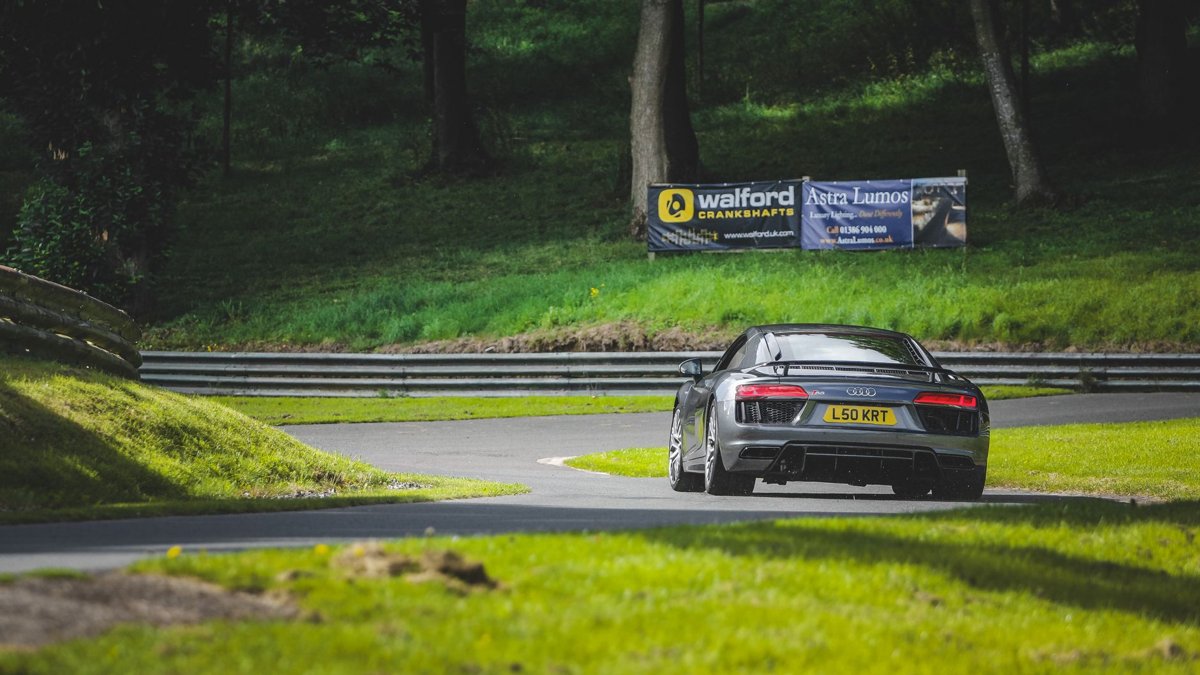
Most UK circuits enforce a static noise limit of 98 dB(A) or a drive-by limit of 105 dB(A), measured at 0.5 m from the exhaust at a set engine speed. If your car or bike exceeds the circuit's figure, you get black-flagged and your day ends early — no refund. That one number decides whether you get on track, so it belongs on your checklist long before you turn up.
Track day noise limits exist because circuits operate under planning conditions set by their local council. Those conditions cap how loud the site can be at the perimeter, so operators pass the limit down to individual vehicles through a static test at sign-on. Get familiar with how it works and you'll never waste a booking on a day your car can't legally run.
How track day noise limits are measured
There are two methods, and knowing which one a circuit uses matters.
- Static test: The meter is held 0.5 m from the exhaust outlet, at a 45° angle, with the engine held at a fixed rpm — usually three-quarters of the rpm of maximum power, or a set figure like 4,500–5,000 rpm. This is the most common method at UK test-at-the-gate days.
- Drive-by test: A trackside meter records the car as it passes at speed. Limits are higher (typically 105 dB) because the reading is taken further away. Some circuits monitor drive-by continuously and will pull cars that trip the sensor mid-session.
A static pass does not guarantee a drive-by pass. A car that reads 97 dB static can still trip a 92 dB drive-by monitor if it's loud at full throttle on the straight. Where both apply, the drive-by figure is the one that gets you flagged during the session.
Typical UK circuit noise limits
Limits vary hugely by venue because they're tied to local planning. Brands Hatch and other Kent circuits are among the strictest; some midweek open-pit-lane days are far more relaxed. Always confirm the figure for your specific date — the same circuit can run different limits on different days.
| Circuit | Typical static limit | Notes |
|---|---|---|
| Brands Hatch | 98 dB (often tighter on some days) | Strict; drive-by monitoring common |
| Silverstone | 98 dB static / 105 dB drive-by | Varies by circuit configuration |
| Donington Park | 98 dB static / 105 dB drive-by | Residential boundary nearby |
| Snetterton | 105 dB drive-by | More relaxed than most |
| Cadwell Park | 96–100 dB (date dependent) | Rural site, varies by day |
| Bedford Autodrome | Unlimited / no noise test | No residential boundary issues |
Figures change season to season. Our UK circuits ranked guide covers how each venue compares on more than just noise, and every date in our search listing shows the stated limit so you can filter before you book.
Why the same car passes at one circuit and fails at another
Three things move the reading, and they explain most "but it passed last week" frustration:
- The rpm the test is held at. A circuit testing at 5,500 rpm will read higher than one testing at 4,500 rpm. Engines with a loud top end suffer most.
- Exhaust condition and temperature. A cold exhaust reads quieter. Baffles that have blown out, cracked silencers or a loose backbox all add several dB.
- Meter placement and operator. There's natural variation of 1–2 dB between testers. If you're borderline, that variation is the difference between running and going home.
Treat anything within 2 dB of the limit as a fail risk. A car that reads 98 dB on a cold morning at the gate can creep over once the exhaust is hot and the tester holds a few hundred rpm higher.
How to pass the noise test
If your car is close to the limit, these are the fixes that actually work, roughly in order of cost:
- Fit a baffle or db-killer. A removable exhaust baffle can drop readings by 3–6 dB. The cheapest and most effective option for aftermarket exhausts — keep one in the boot for strict circuits.
- Add a rear silencer or secondary box. A bolt-on back silencer for de-cat or straight-through systems brings most loud cars under 98 dB.
- Check for leaks and loose joints. A blowing gasket or cracked weld adds noise cheaply to fix. Inspect before the day, not in the queue.
- Change gearing on the test. Where you choose the gear for a static test, a lower rpm at the held speed helps — but you can't control this on a drive-by.
- Book a higher-limit circuit. Sometimes the simplest answer. If your car reads 103 dB, a 105 dB drive-by day or a no-limit venue like Bedford Autodrome is the sensible pick.
Bikes face the same tests. Most track-focused aftermarket cans come with removable baffles for exactly this reason — fit them before you leave home.
What happens if you fail
Fail the static test at sign-on and you won't be allowed out. Organisers rarely refund on noise grounds — it's your responsibility to turn up legal, and it's stated in the terms. If you trip a drive-by monitor during a session, you'll be black-flagged in; a first offence is usually a warning, a repeat gets you parked for the day. Either way you've burned a booking fee, travel and a day off, so it pays to get this right in advance.
If you're chasing a cheap midweek slot, don't let noise catch you out — our guides on last-minute track days and track day price comparison both flag how to read the small print before you pay.
Noise limits for beginners
A standard road car almost always passes — factory exhausts are engineered well under 98 dB. Noise limits only become a concern once you fit an aftermarket exhaust, remove a cat, or run a dedicated track car. If you're booking your first day in a stock car, you've got nothing to worry about. New to this entirely? Start with our beginner-friendly track day guide.
Frequently asked questions
What is the standard track day noise limit in the UK?
The two most common figures are 98 dB(A) static (measured 0.5 m from the exhaust at a set rpm) and 105 dB(A) drive-by. Some rural or low-boundary circuits are tighter at 96 dB, while venues like Bedford Autodrome have no test at all. Always check the limit for your specific date.
Will a standard road car pass the noise test?
Almost always. Factory exhaust systems are designed well within 98 dB. You only need to worry if you've fitted an aftermarket exhaust, removed the catalytic converter, or run a stripped-out track car.
How can I quickly reduce my car's exhaust noise to pass?
The fastest fix is a removable exhaust baffle or db-killer, which typically drops readings by 3–6 dB. For louder cars, a bolt-on rear silencer brings most systems under 98 dB. Check for blowing gaskets and cracked welds too — they add noise and are cheap to fix.
What happens if I fail the noise test on the day?
You won't be let on track, and organisers rarely refund on noise grounds — turning up legal is your responsibility. If you pass static but trip a drive-by monitor mid-session you'll be black-flagged; repeat offences get you parked for the rest of the day.
Book the right circuit for your car
The simplest way to avoid a wasted day is to match your car's noise output to the circuit before you book. Our search lets you filter track days by stated noise limit alongside price, date and location, so you only see dates your car can actually run. Browse and compare on TrackdayFinder, and if you're borderline, pack a baffle and book early — strict-limit circuits sell out fast.
Looking for a date? Browse every UK & European trackday or get email alerts when new ones appear.