
Track Day Noise Limit by Circuit: UK Limits, Testing and How to Avoid a Black Flag
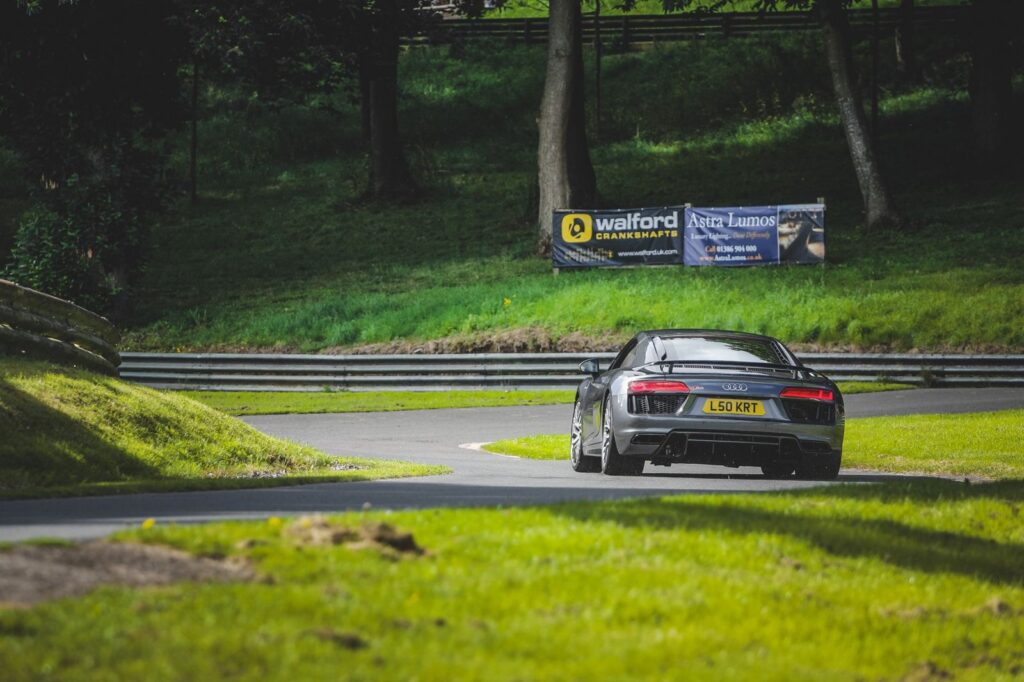
Nothing ends a track day faster than a failed noise test. You’ve paid your entry, driven or trailered your car across the country, and the marshal at the sound meter waves you off before you’ve turned a wheel. The good news: it’s entirely avoidable if you know the track day noise limit by circuit before you book. Limits vary wildly — from a strict 87.5dB static at some circuits to open, no-limit days at others — and the same car can pass at one venue and fail at the next.
This guide breaks down the noise limits at the UK’s main circuits, explains the difference between static and drive-by testing, and gives you practical ways to stay legal for the day. If you want the full technical background on how the measurements work, our deep dive on UK track day noise limits covers static and drive-by methods in detail.
Why noise limits differ so much between circuits
Circuit noise limits aren’t set by motorsport bodies for fun — they’re driven by planning permission and local authority agreements, usually to keep nearby residents onside. A circuit hemmed in by villages, like Cadwell Park or Brands Hatch, runs far tighter limits than one out in open country. Some circuits also hold a fixed number of “unlimited” or high-limit days per year as part of their planning consent, which is why you’ll see the same venue advertise both 98dB and 105dB days.
Two things matter for whether you’ll pass:
- The measurement method — static (engine held at a set RPM, meter 0.5m from the exhaust at 45°) or drive-by (meter trackside as cars pass at speed).
- The limit in decibels — and crucially, which method that figure applies to. A 98dB static limit is far easier to meet than a 92dB drive-by.
Track day noise limit by circuit: UK quick-reference table
The figures below are typical published limits for open pitlane and sessioned car/bike days. Always confirm the limit for your specific date — organisers run different limits on different days at the same circuit, and unlimited days appear throughout the calendar.
| Circuit | Static limit (dB) | Drive-by limit (dB) | Notes |
|---|---|---|---|
| Brands Hatch | 105 | 92 | Drive-by strictly enforced; noise-sensitive site |
| Cadwell Park | 105 | 92 | Very tight; rural setting, see our Cadwell guide |
| Silverstone | 105 | 98 | More relaxed; some unlimited days |
| Donington Park | 105 | 98 | Drive-by monitored near airport boundary |
| Oulton Park | 105 | 92 | Rural; strict drive-by enforcement, see our Oulton Park guide |
| Snetterton | 105 | 98 | Generally accommodating limits |
| Anglesey | 105 | — | Coastal; relatively relaxed, see our Anglesey guide |
| Bedford Autodrome | — | — | No noise limit — popular with loud cars |
| Blyton Park | — | — | No noise limit on most days |
| Croft | 105 | 92 | Limited noisy days per planning consent |
The pattern is clear: static limits cluster around 105dB and are rarely a problem for a road car, even a modified one. It’s the drive-by limit that catches people out — 92dB drive-by is genuinely tight, and a car that reads 100dB static can still exceed it under load in third gear.
Static vs drive-by: which test will you actually face?
Most UK track days use a static test as a pre-event check. You’ll drive to the noise-testing bay, an official holds a meter 0.5m from the exhaust tip at 45°, and you rev to a specified engine speed (often two-thirds of max RPM, or a fixed figure like 4,500rpm). It’s a quick pass/fail before you’re allowed out.
Drive-by monitoring runs during the day itself. Meters positioned at the trackside boundary log cars at full chat. This is where a car can pass scrutineering in the morning and still collect a black flag by lunchtime — because on track, at high RPM and full throttle, it’s simply louder. Circuits with drive-by limits below 95dB are the ones to research carefully.
Rule of thumb: pass static with 3–4dB of headroom if you’re heading to a circuit with a 92dB drive-by limit. Scraping through the static test almost guarantees a drive-by failure.
What happens if you fail
Fail the static test and you don’t go out — simple as that, and you rarely get a refund. Breach the drive-by limit during the day and you’ll get a warning, then a black flag pulling you into the pits. Persistent offenders are excluded for the rest of the day. Neither outcome is refundable, so the meter is not the place to gamble.
How to make sure you pass
- Check the limit before you book. Filter and compare noise limits across circuits and dates on Trackday Finder so there are no surprises. Our circuit guides list limits venue by venue.
- Get your car tested independently first if it’s modified or on an aftermarket exhaust. Many rolling-road and exhaust shops will do a static reading for you.
- Fit a quieter backbox or a baffle/db-killer for track use. A removable baffle is the cheapest insurance for a car that’s borderline.
- Short-shift in the noise-monitored zones. If you know where the trackside meters sit, lifting slightly there can keep you legal without wrecking your lap.
- Book unlimited-noise days at Bedford or Blyton if your car is genuinely loud — it’s less hassle than fighting a 92dB limit all day.
Bikes vs cars: different limits, same principle
Bike track days generally run their own noise limits, often measured static at a set RPM, and they can be tighter than car days at the same venue because bike exhausts are notoriously loud at the meter. Cadwell Park is a classic example — strict limits in a rural setting. See our Cadwell Park bike track day guide and the Anglesey guide for venue-specific bike figures. For a broader comparison of how car and bike days work, costs included, read car and bike track days compared.
European circuits: even more variation
Head abroad and the picture changes again. The Nürburgring Nordschleife Touristenfahrten sessions run drive-by monitoring with limits that have tightened over the years — plan around them using our Touristenfahrten dates guide. Spa-Francorchamps is comparatively relaxed on noise but pricey to lap; see our Spa track day prices breakdown. If you’re modifying an exhaust or fabricating lightweight parts to shave noise and weight, the crossover with bespoke carbon engine parts is worth a look. Related: if you’re chasing more power alongside a quieter setup, see Peugeot TU individual throttle bodies @ GMR.
Frequently asked questions
What is the strictest track day noise limit in the UK?
The tightest common figure is a 92dB drive-by limit, enforced at circuits like Cadwell Park, Oulton Park, Brands Hatch and Croft. Static limits are usually more generous at around 105dB, so it’s the drive-by figure that trips people up.
Which UK circuits have no noise limit?
Bedford Autodrome and Blyton Park run no-limit days on most of their calendar, making them the go-to venues for loud, race-prepped cars. Always check the specific date, as occasional exceptions apply.
Can I fail a drive-by test after passing the static test?
Yes — and it’s common. The static test measures your exhaust at a fixed RPM while stationary. On track at full throttle and high revs your car is louder, so it can exceed a drive-by limit even after passing static. Aim for 3–4dB of static headroom at strict circuits.
How do I find low-noise-limit-friendly track days?
Use the filters on Trackday Finder to compare noise limits across more than 1,800 events, then set an email alert for availability at your preferred venue. Book early — the relaxed and unlimited days sell out first.
Related: Open Pitlane Track Days: How the Format Works and Who It Suits
Related: Cheapest Nürburgring Track Days: How to Lap the Nordschleife for Less
Leave a Reply